
Beginner Yoga for Golfers Guide: Move Better, Golf Better.
If you think yoga is only for people who can touch their toes, think again. For golfers, yoga is a performance tool. It’s about creating the "space" in your body to swing faster, stay centered, and play 18 holes without reaching for the ibuprofen.
The Three Keys for Beginners
1. Target "Golf-Specific" Areas
Instead of trying every pose, focus on the three zones that directly impact your swing and score:
The Mid-Back (Thoracic Spine): For maximum rotation in the backswing.
The Hips: For explosive power in the downswing.
The Hamstrings: To maintain a solid "athletic posture" at address.
2. Use Your "Tools" (Props)
Don't force your body into positions it isn't ready for. Use these to bring the floor to you:
The Chair: Perfect for seated twists and supported lunges.
The Wall: Provides balance and deepens chest stretches.
A Golf Club: Use it for overhead mobility and balance while standing.
Yoga Blocks: Essential for "lengthening" your arms in lunges.
3. Set Reasonable Expectations
I know this can be a hard concept for golfers who are trying to perfect their game but when it comes to yoga “being good” isn’t the point. We are looking to feel better in our bodies and that doesn’t mean achieving “perfection”. So approach starting yoga with low expectations & a curious mind.
Here are some tips for taking it easy:
Breathe through your nose: If you hold your breath, your muscles stay tight. Nasal breathing tells your nervous system to let go.
Consistency > Intensity: Consistency over intensity is the secret to a better swing. 5 minutes every morning is better than a 90-minute class once a month.
Don't "Push": Yoga isn't a bench press. If it hurts, back off. We want a "productive stretch," not pain.
The Yoga for Golf Mobility & Strength "Starter Kit"
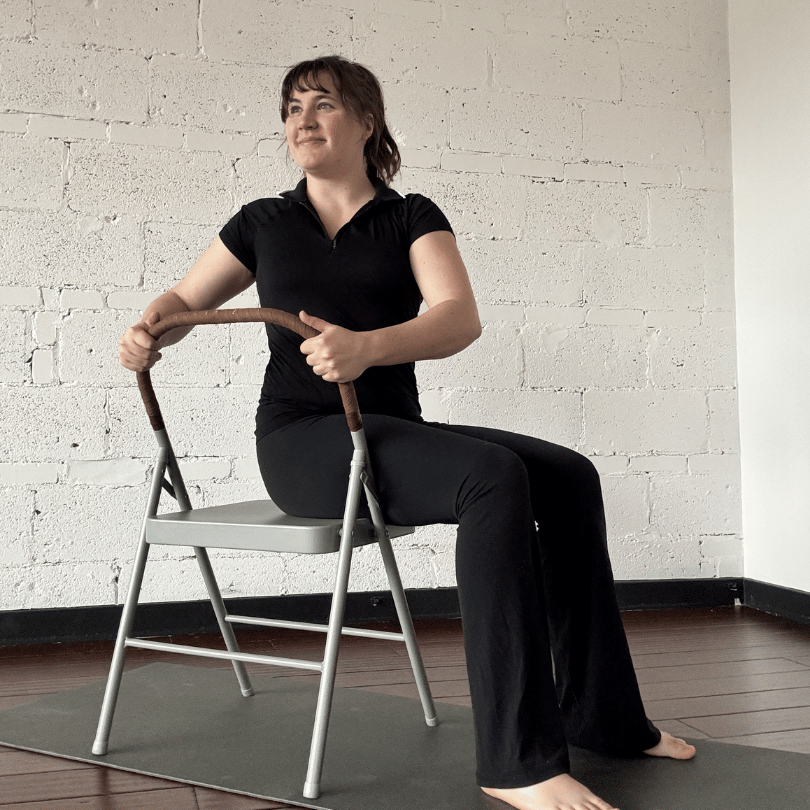
1. Seated Chair Twist (The Backswing Builder)
Sit toward the edge of your chair and exhale as you rotate your torso toward the back of the chair. This trains the mid-back (thoracic spine) to rotate while keeping the lower body stable.
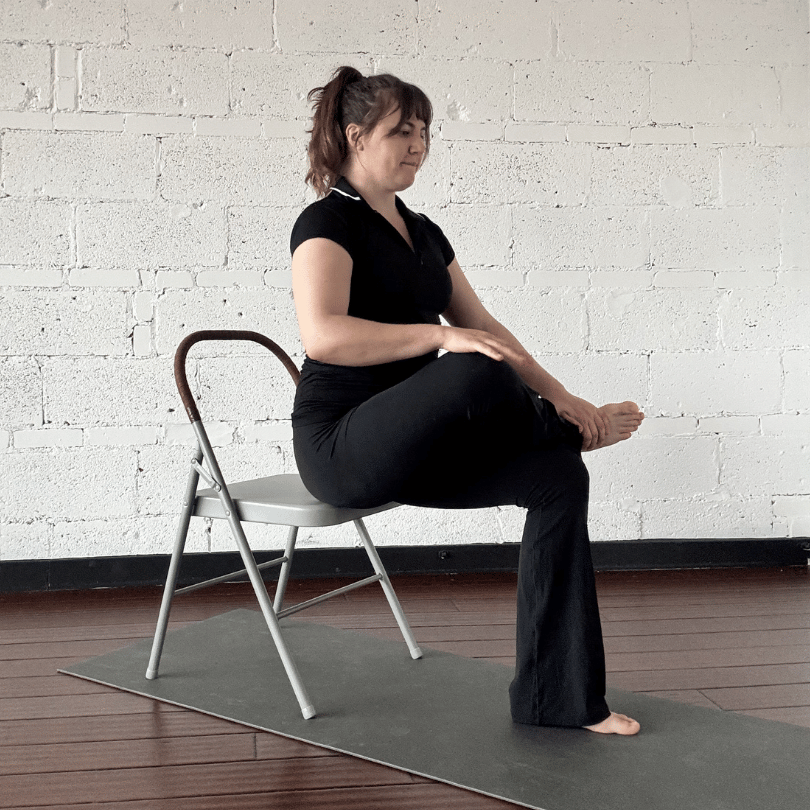
2. Seated Figure 4 (The Lower Back Saver)
Sit tall and cross one ankle over the opposite knee; lean forward slightly. This unlocks the glutes and piriformis, allowing the hips to rotate freely rather than pulling on your lumbar spine.
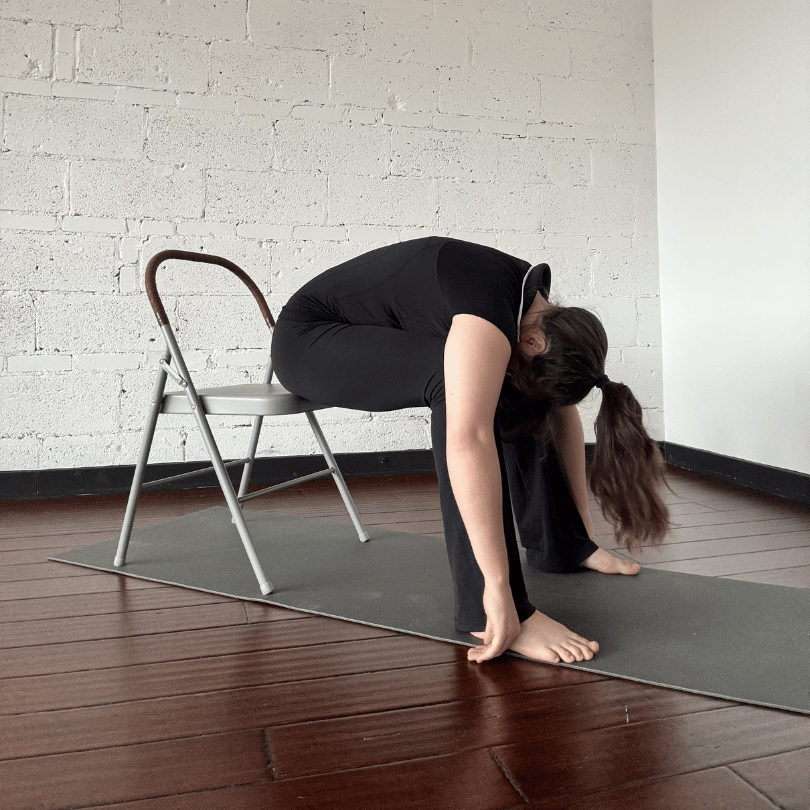
3. Seated Forward Fold (The Decompressor)
While seated, slowly drape your torso over your legs and let your head hang heavy. This releases tension in the lower back and calms the nervous system after a round.
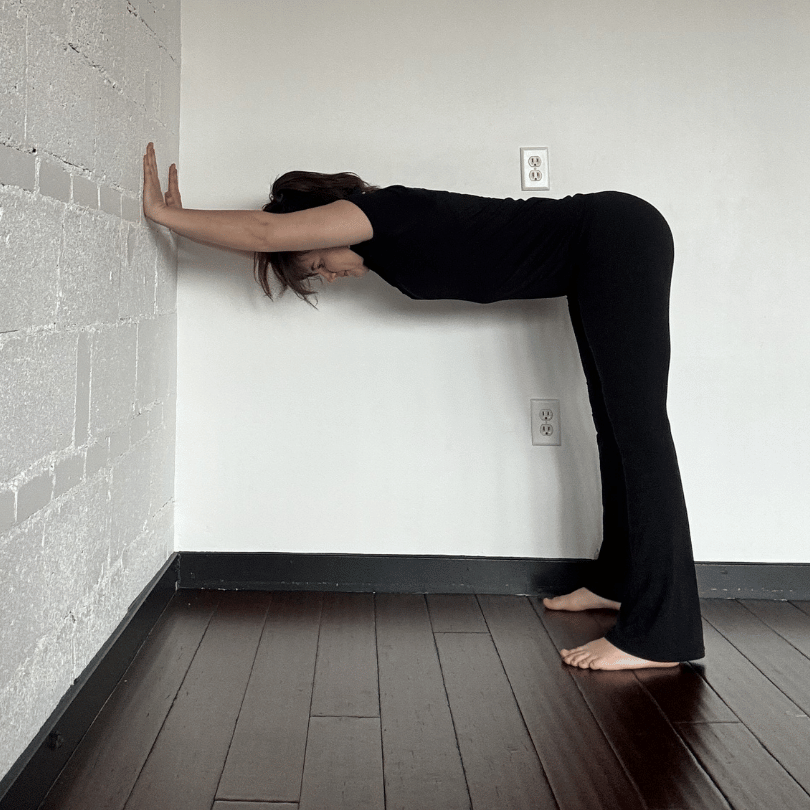
4. Wall Downward Dog (The Full Body Reset)
Place your hands on a wall at hip height and walk your feet back until your body forms an "L" shape. This stretches the hamstrings, calves, and lats all at once to prevent posture collapse at the ball.
5. Wall Chest Stretch (The Posture Reset)
Place one forearm against a wall or doorframe and gently turn your body away. This resets your posture after a day of carrying a heavy bag or leaning over putts.
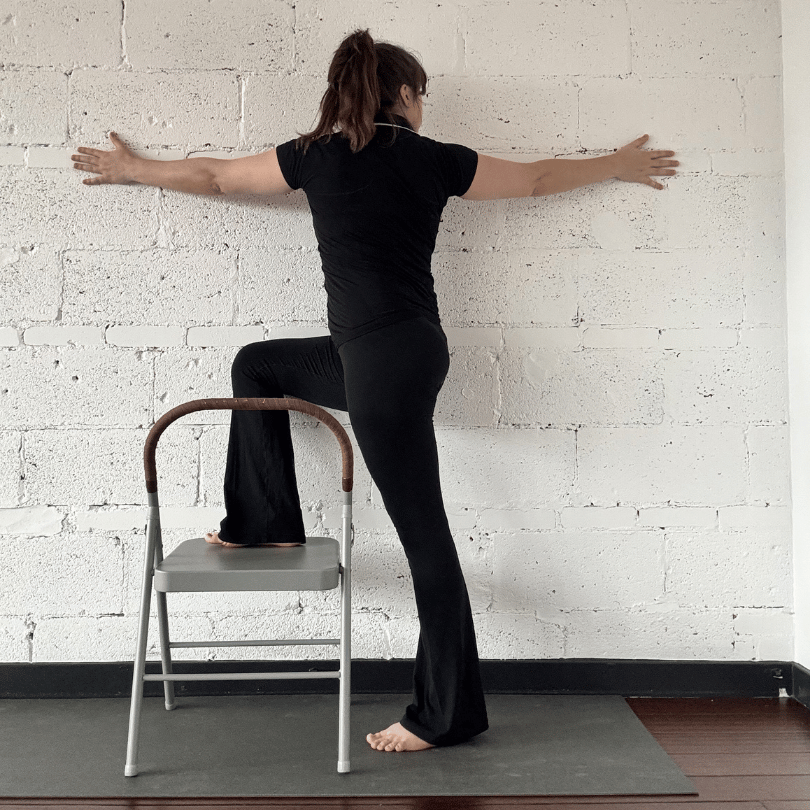
6. Single-Leg Balance (The Weight Transfer Test)
Simply stand on one leg (use a chair for safety) for 30 seconds. This mimics the balance and ankle stability required for a controlled, pro-style finish.
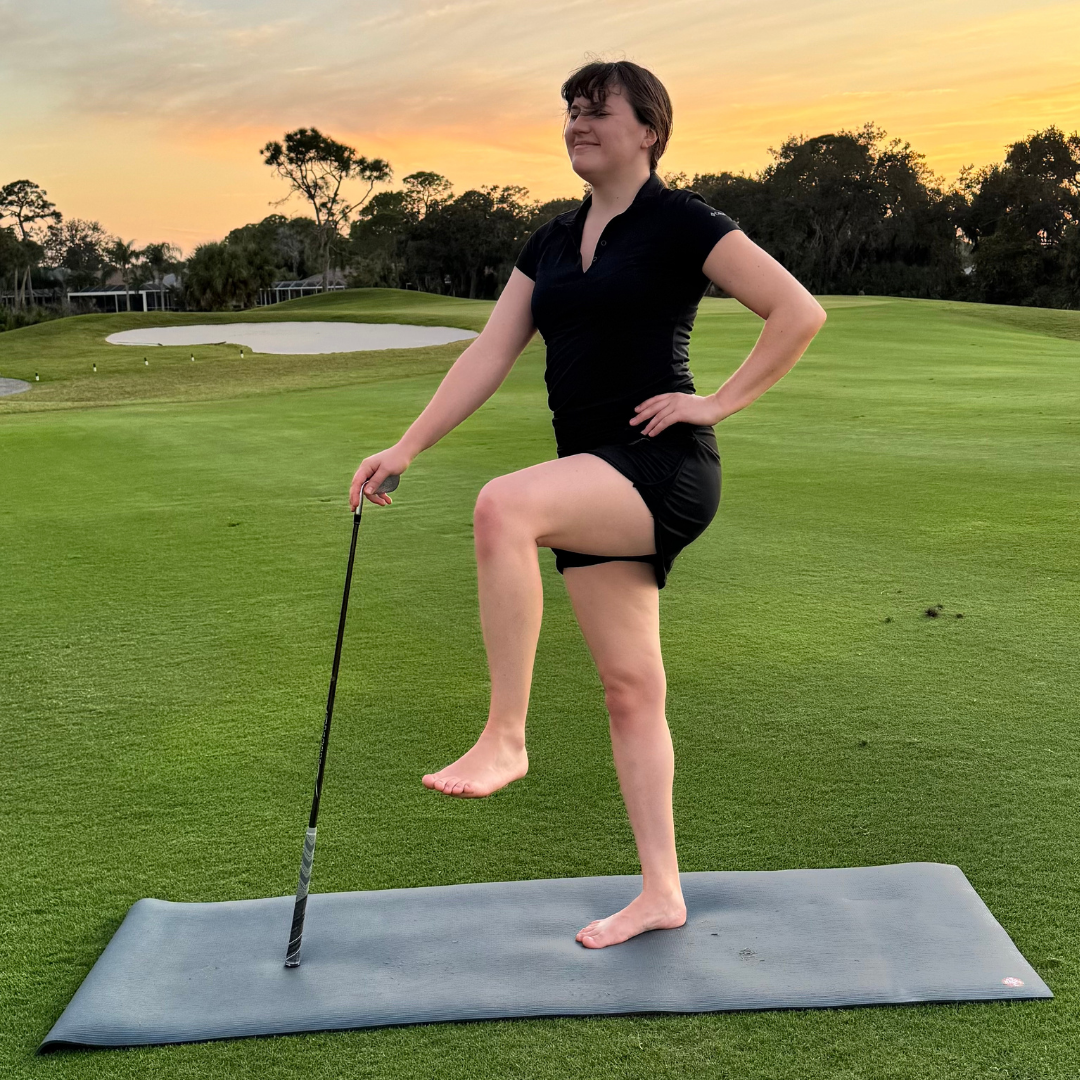
7. Supported Low Lunge (The Stance Improver)
Use a chair or wall for balance and step one foot back into a lunge. This opens the hip flexors that get tight from sitting, allowing you to stand taller and move through the ball with ease.
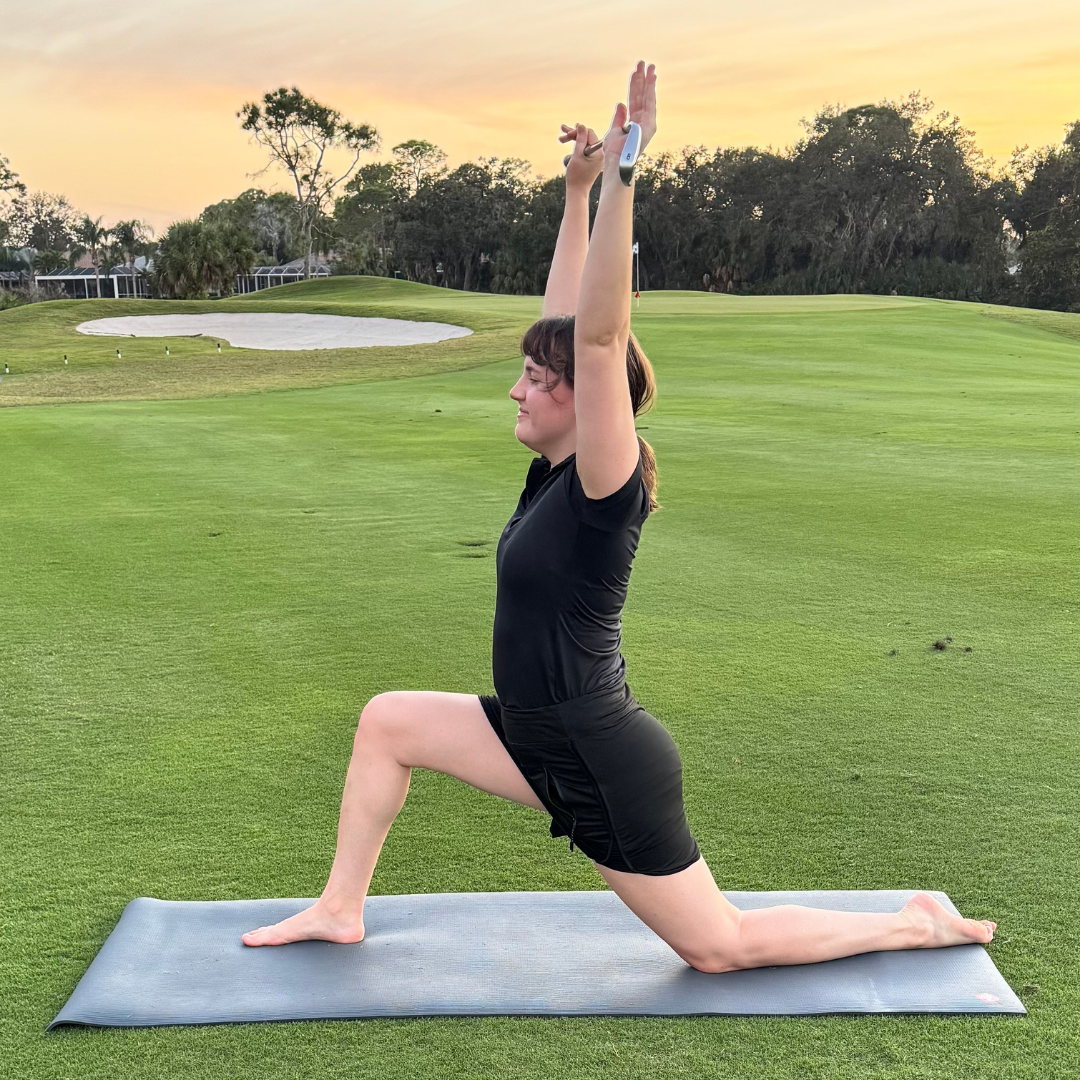
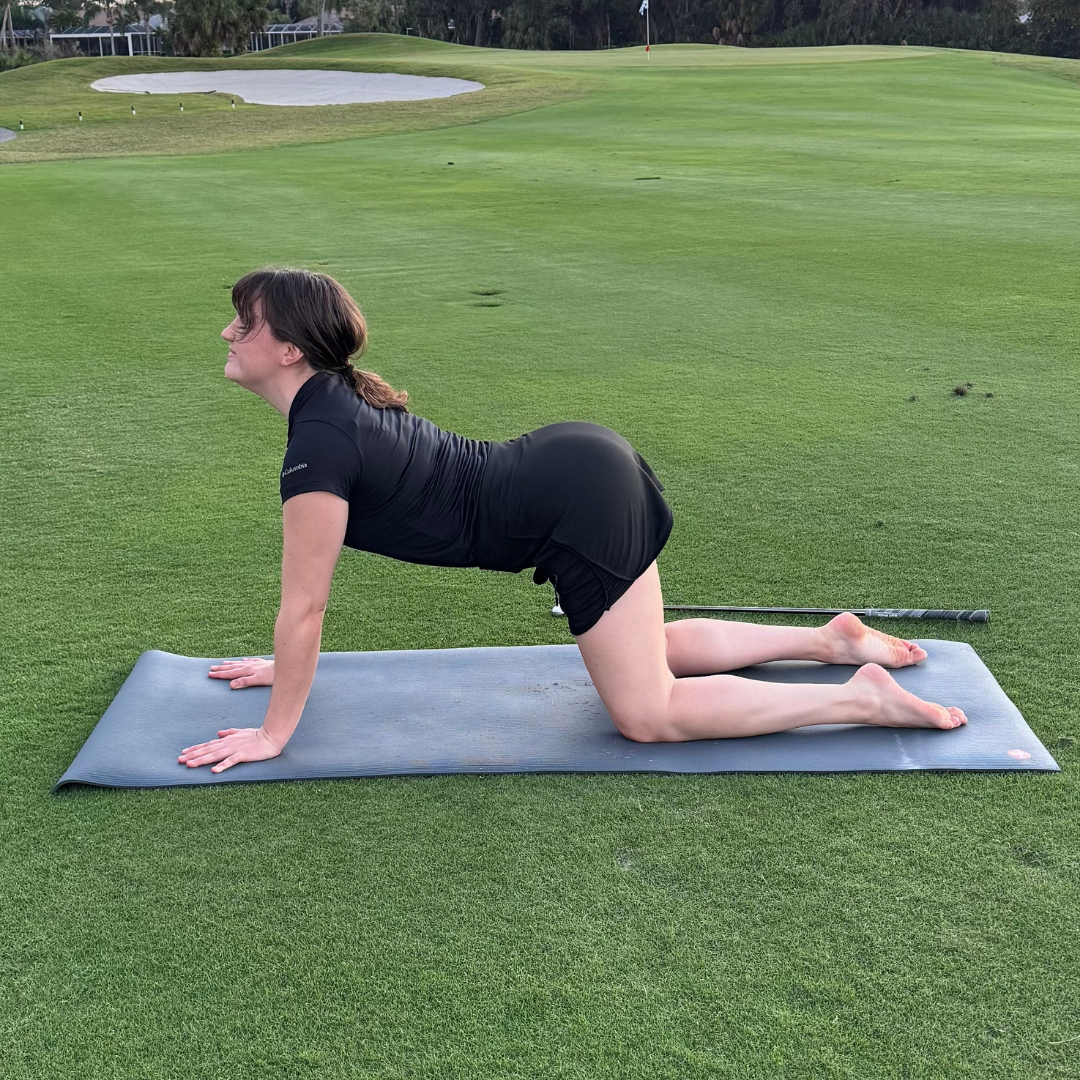
8. Cat-Cow (The Spine Lubricator)
On hands and knees (or standing leaning on a chair), slowly arch and round your back with your breath. This gets the vertebrae moving and helps you find a neutral pelvic tilt for a better setup at address.
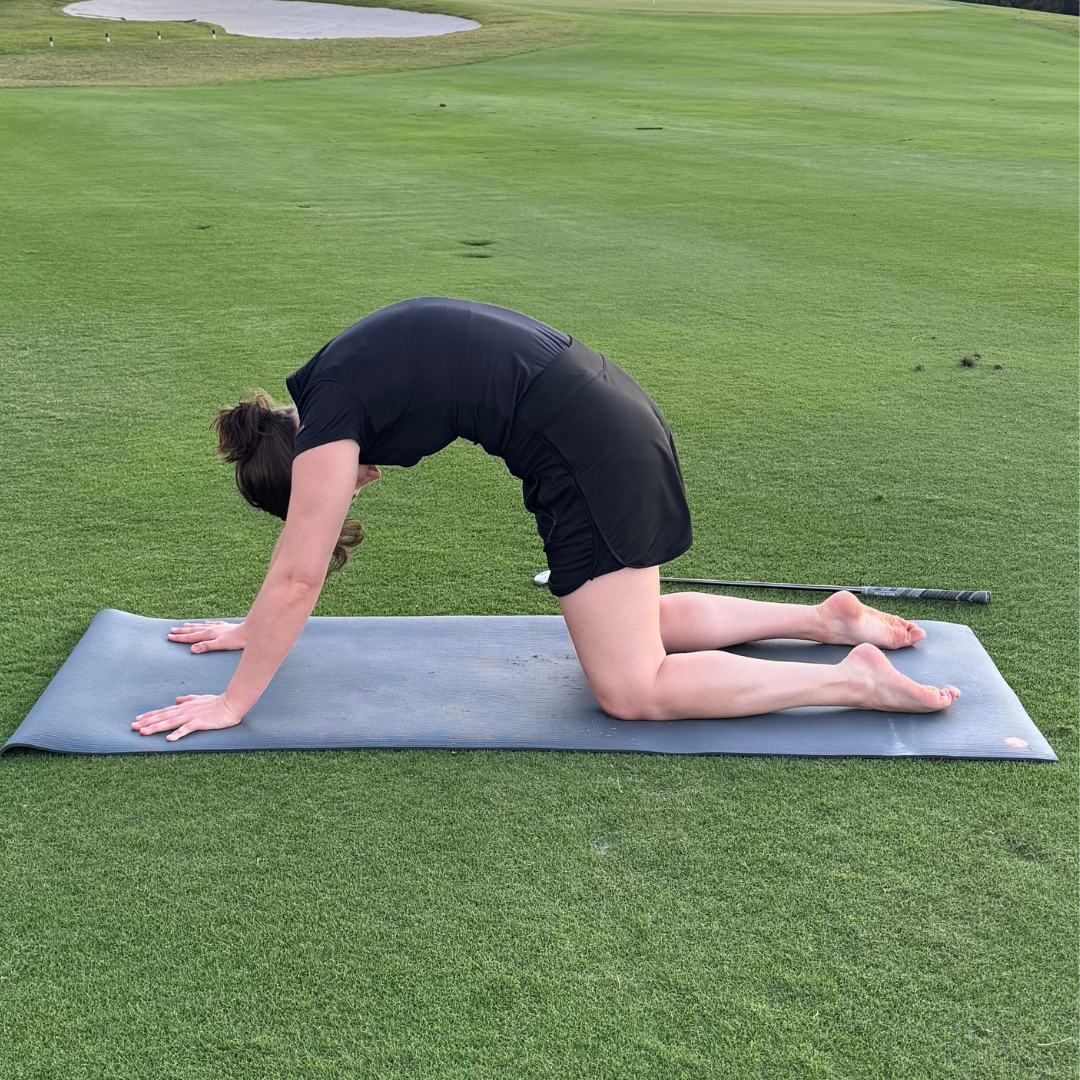
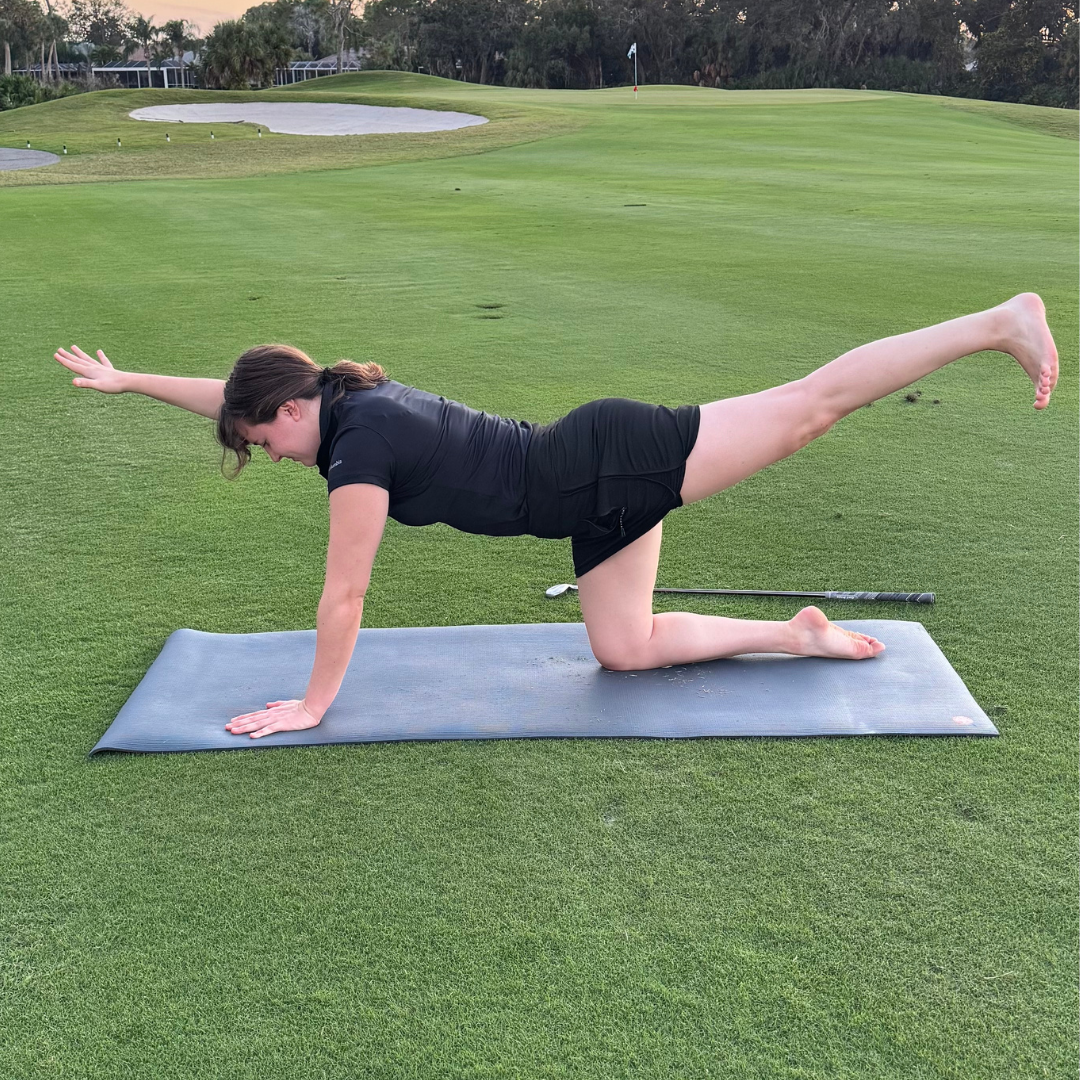
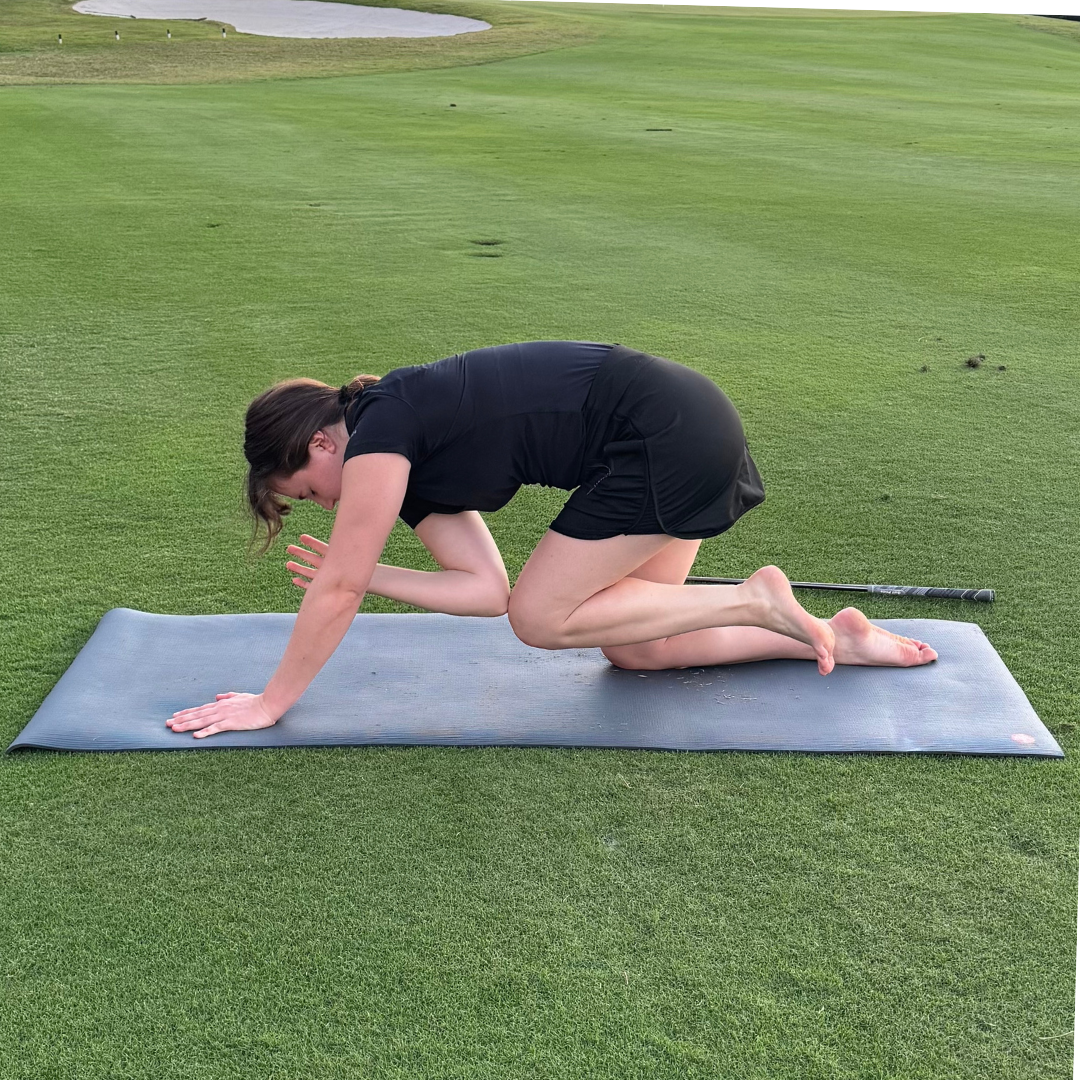
9. Bird-Dog (The Anti-Sway Drill)
From hands and knees, extend the opposite arm and leg simultaneously. This builds the cross-body core strength needed to stay "on plane" and stable throughout the swing.
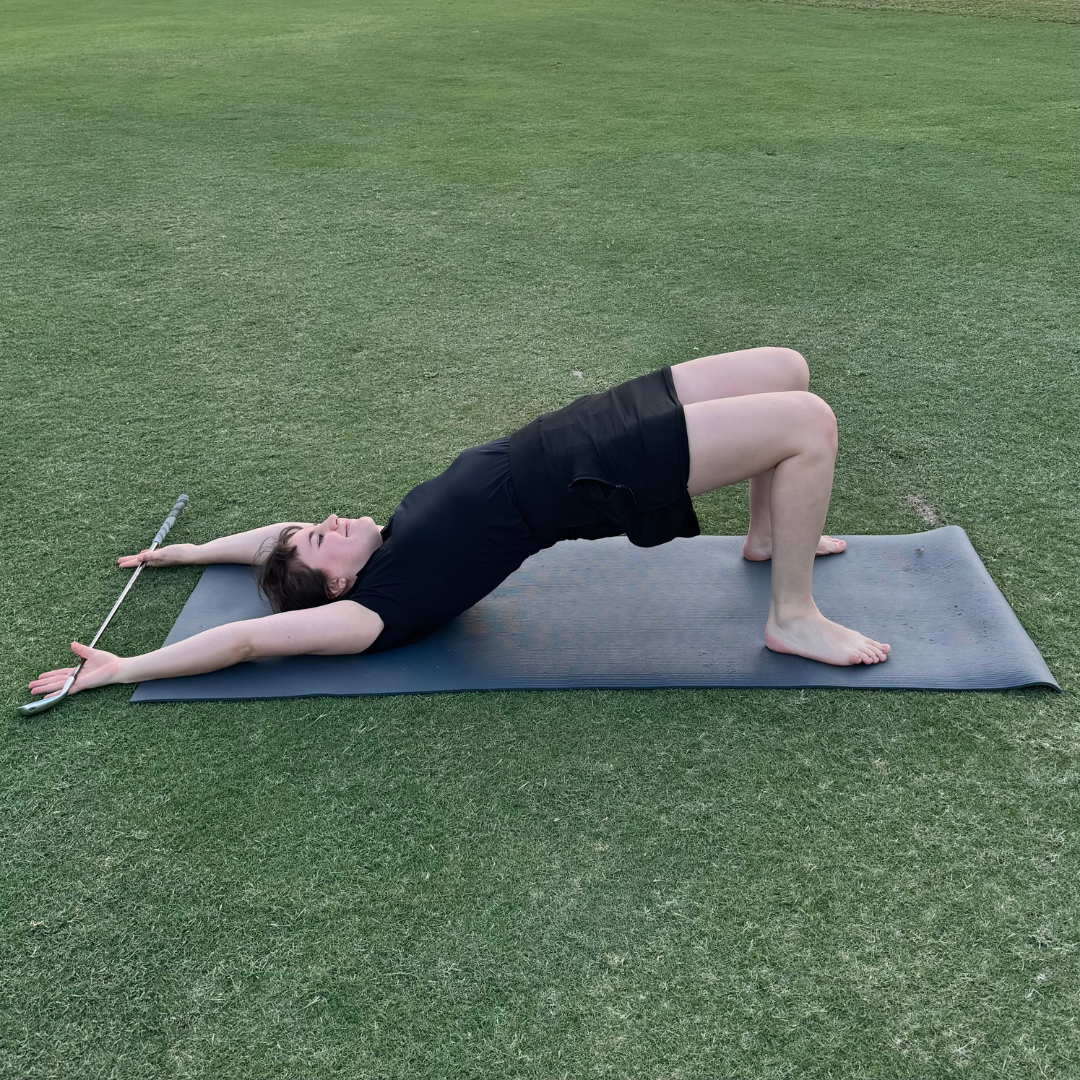
10. Glute Bridges (The Swing Engine)
Lying on your back, press through your heels to lift your hips. This is a simple strength move to "wake up" the glutes so they can provide the actual power in your downswing.
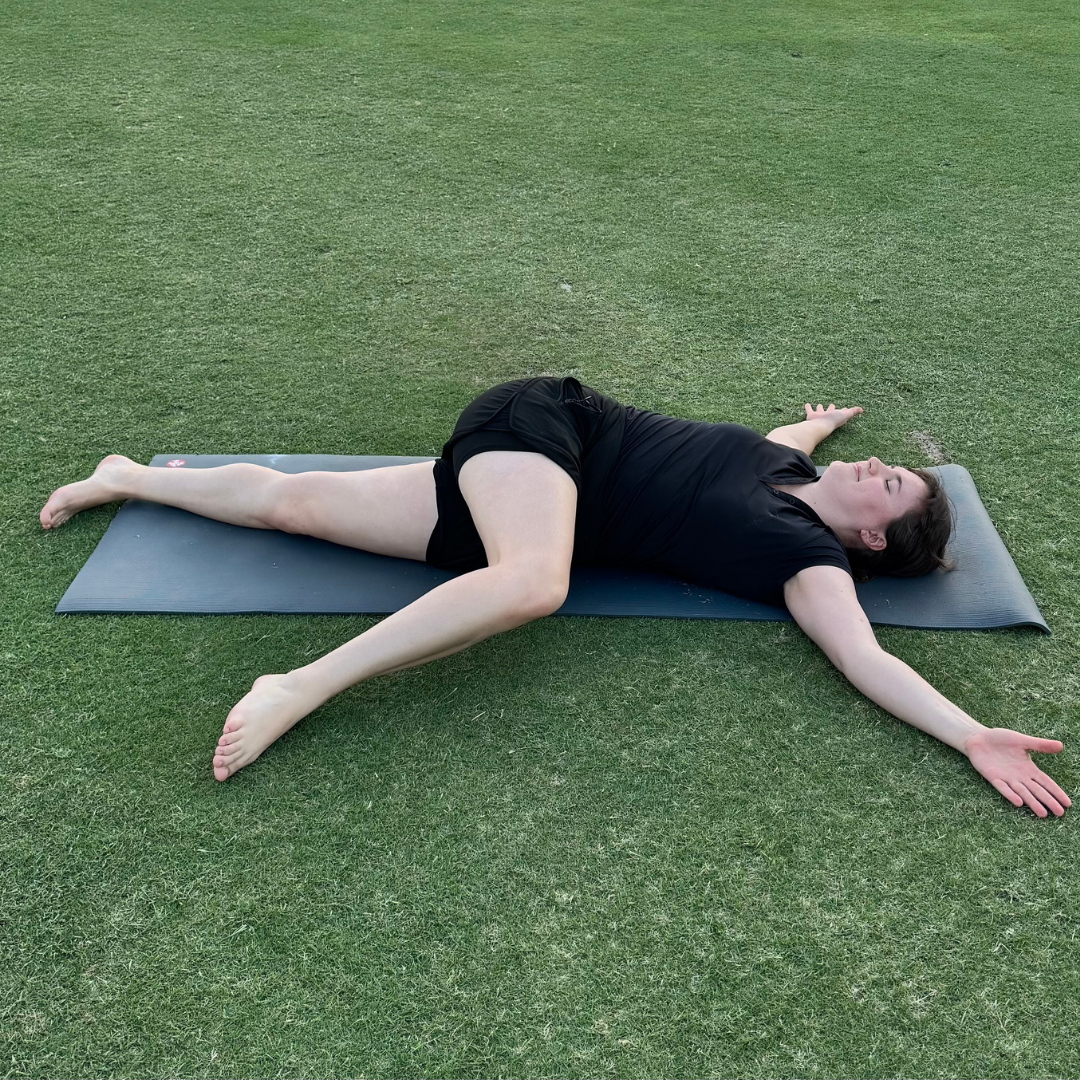
11. Supine Twist (The Final Release)
Lying on your back, let both knees fall gently to one side while looking the opposite way. This provides a final, passive release for the hips and spine.
The "Cheat Sheet" for Your First Week of Yoga for Golf
If you're overwhelmed, just pick one move from each category daily:
Morning: Cat-Cow (30 seconds) to wake up the spine.
Pre-Round: Seated Figure 4 (1 minute per side) to prep the hips.
Evening: Wall Downward Dog (5 breaths) to decompress after the 18th.
The Bottom Line
Yoga isn't about being flexible; it's about being functional. The more mobile your body is, the more efficient your swing becomes.
Ready to try your first flow?
Check out my latest blog post for a full chair-assisted routine designed specifically for the golf season!
